Sort by:
- Doctors (7)
- Locations (6)


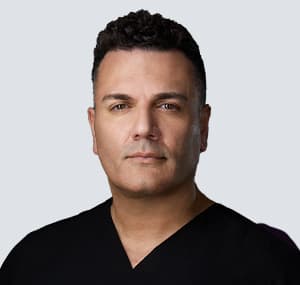
Kam Kassiri, MSC MD FRCSC
Contact Info
Office Hours
- Today
- 8:00AM - 4:30PM
Kam Kassiri, MSC MD FRCSC
About Kam Kassiri, MSC MD FRCSC
Dr. Kam Kassiri completed his bachelor's degree in pharmacology and then went on to achieve a master’s degree in neuroscience at the University of Toronto. Dr. Kassiri acquired his medical degree from the University of Manitoba and completed his residency in ophthalmic surgery at the University of Alberta. His excellence in both medical school and research is highlighted by numerous scholarships during his medical training.
Upon finishing his residency, Dr. Kassiri received surgical training from some of the world's most renowned surgeons and is committed to using the latest technologies and techniques in refractive surgery.
In addition to his work at LASIK MD, Dr. Kassiri is on staff at the University of Alberta, leading a comprehensive ophthalmology practice, and he is involved in teaching both undergraduate medical students as well as ophthalmic surgery residents.
Dr. Kassiri's extensive ophthalmological research is underlined by the numerous awards and scholarships he has received over the years, including surgical scholarships from the Eye Foundation of Canada and the Canadian Institute of Health Research (CIHR). He also presented at numerous national and international medical conferences, and has been published in the Canadian Journal of Ophthalmology. His other achievements include a patented device he developed for which he took the top engineering award in Alberta as well as the top award in mechanical engineering in Canada in 2009.
Select Your Region
North Africa
References
1. Patient Survey, STAAR Surgical ICL Data Registry, 2018
2. Sanders D. Vukich JA. Comparison of implantable collamer lens (ICL) and laser-assisted in situ keratomileusis (LASIK) for Low Myopia. Cornea. 2006 Dec; 25(10):1139-46. Patient Survey, STAAR Surgical ICL Data Registry, 2018
3. Naves, J.S. Carracedo, G. Cacho-Babillo, I. Diadenosine Nucleotid Measurements as Dry-Eye Score in Patients After LASIK and ICL Surgery. Presented at American Society of Cataract and Refractive Surgery (ASCRS) 2012.
4. Shoja, MR. Besharati, MR. Dry eye after LASIK for myopia: Incidence and risk factors. European Journal of Ophthalmology. 2007; 17(1): pp. 1-6.
5a. Lee, Jae Bum et al. Comparison of tear secretion and tear film instability after photorefractive keratectomy and laser in situ keratomileusis. Journal of Cataract & Refractive Surgery , Volume 26 , Issue 9 , 1326 - 1331.
5b. Parkhurst, G. Psolka, M. Kezirian, G. Phakic intraocular lens implantantion in United States military warfighters: A retrospective analysis of early clinical outcomes of the Visian ICL. J Refract Surg. 2011;27(7):473-481.
Important Safety Information
The EVO/EVO+ ICLs are indicated for patients who are 21 to 60 years of age and are available in spherical powers ranging from -3.0 D to -18.0 D for the correction/reduction of myopia with or without a cylinder power range from 1.0 D to 6.0 D. The hyperopic ICLs are indicated for patients who are 21 to 45 years of age and are available in powers ranging from +3.0 D to +10.0 D for the correction/reduction of hyperopia. In order to be sure that your surgeon will use an ICL with the most adequate power for your eye, your nearsightedness, farsightedness and astigmatism should be stable for at least a year before undergoing eye surgery. ICL surgery may improve your vision without eyeglasses or contact lenses. ICL surgery does not eliminate the need for reading glasses, even if you have never worn them before. ICL represents an alternative to other refractive surgeries including, laser assisted in situ keratomileusis (LASIK), photorefractive keratectomy (PRK), incisional surgeries, or other means to correct your vision such as contact lenses and eye glasses. Implantation of an ICL is a surgical procedure, and as such, carries potentially serious risks. The following represent potential complications/ adverse reactions reported in conjunction with refractive surgery in general: additional surgeries, cataract formation, loss of best corrected vision, raised pressure inside the eye, loss of cells on the innermost surface of the cornea, conjunctiva I irritation, acute corneal swelling, persistent corneal swelling, endophthalmitis (total eye infection), significant glare and/or halos around lights, hyphaema (blood in the eye), hypopyon (pus in the eye), eye infection, ICL dislocation, macular oedema, non-reactive pupil, pupillary block glaucoma, severe inflammation of the eye, iritis, uveitis, vitreous loss and corneal transplant. Before considering ICL surgery you should have a complete eye examination and talk with your eye care professional about ICL surgery, especially the potential benefits, risks, and complications. You should discuss the time needed for healing after surgery.